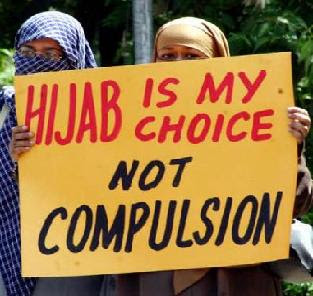
In Iran, women are required to have some sort of head cover while in public. The law was put into effect in 1979 and states that women must cover their hair with the hijab. Masih Alinejad describes how this law impacted families, some even crying for their daughters’ lost freedom as wearing the hijab was once a symbolic and voluntary practice. Now days, it is very much a possibility for a women to be arrested for not complying with the law. To Alinejad, her brother lived a life that she wouldn’t not be able to have. He was able to dress and wear what he wanted, as a boy he was not restricted by the same law she was. She envied his ability to play and run without restriction. She wanted the choice to express herself in the same way. One day Alinejad took to the internet and asked women to share photos of themselves without their compulsory hijab. The responses were remarkable. Women replied saying that they loved what the hijab represented, but not that they were required to wear it. Even pictures with men supporting women in their chose to cover their hair or not were sent to her. Alinejad concludes that Iran should be representative of both sides: women who want to wear a scarf and those who choose not to. Every decision should be respected and celebrated.

The women who shared pictures of themselves without hijabs in public, participated in a type of protest. The collective acts of women all around the world showing their hair is called mass behavior. They are all protesting though they are not necessarily in the same place at the same time, they are united through their actions. By taking off their hijabs in public, these women are engaging in civil disobedience in order to spark a social change. Over time the hope is for women to have choice. We would call this a progressive activism, they seek to change society. According to pewresearch.org, throughout Muslim dominant countries, women have differing opinions about how acceptable it is to show their hair in public. In Tunisia, 56% of women say that the should be able to choose how they dress. At the same time, only 14% of women believed that they should have the freedom to choose what they wear. To many women, the hijab is vital to preserving modesty. However, to others the hijab represents their commitment to their faith and the significance of wearing the hijab is lessened when it is required.
word count: 423

 Megan's Blog